
"coffee export history"
4000 article(s) found

Fine coffee Honduran Coffee Culture History of Honduran Coffee
When it comes to coffee production, the geographical conditions of Honduras are no less than those of neighboring coffee-producing countries such as Guatemala and Nicaragua. However, due to the lack of strong support in the settlement and transportation of raw beans, Honduras is less well-known in the consumer market. Honduras (Honduras) exported $246424000 of coffee in 2010. There are two in Honduras.

Analysis of planting History of Coffee beans in Costa Rica
Costa Rica, with fertile volcanic soil and good drainage, was the first country in Central America to grow coffee and bananas for commercial value. Coffee and bananas are the country's main exports. Coffee was introduced into Costa Rica from Cuba in 1729. Today, its coffee industry is one of the most well-organized industries in the world, with a yield of 1700 kilograms per hectare. Goss.

A brief introduction to the History and Culture of the Origin and Development of Vietnamese Fine Coffee beans
Vietnam's geographical location is very favorable for coffee cultivation. Southern Vietnam has a hot and humid tropical climate, which is suitable for growing ROBUSTA coffee, while the north is suitable for growing ARABICA coffee. Coffee production in Vietnam has the following characteristics: (1) because there is no effective way to deal with fallen leaves, medium-grain coffee was selected as the main variety in the early 1980s. (2) take planting technology as

Varieties and types of mocha coffee beans in Yemen? Flavor characteristics and taste? Planting history?
Varieties and types of mocha coffee beans in Yemen? Flavor characteristics and taste? Planting history? Mocha Mocha Coffee refers to five types of mocha. The first export port of coffee-the Yemeni port of Moka (the vanished harbor) 2. Coffee brewed in a mocha pot. Italian latte with chocolate 4. The origin of coffee-mocha beans from Hara, Ethiopia, 5. The oldest hometown of coffee

COE Champion Manor Colombia Spring Manor Boutique Coffee Origin Development History Culture Introduction
Today the country is the second largest coffee producer after Brazil, the world's largest exporter of Arabica coffee beans and the world's largest exporter of washed coffee beans. Colombia coffee is often described as having a silky smooth taste. Of all coffees, it has the best balance. The taste is soft, smooth and ready to drink. It achieves the highest quality of coffee.
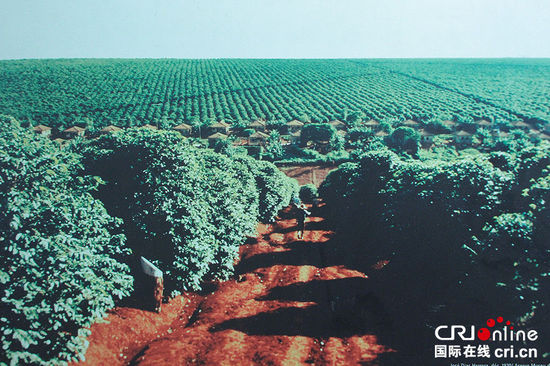
Review the coffee history of Brazil in the Coffee Museum
Brazil's Coffee Manor International online report (Reporter Zeng Yun): Brazil is the largest coffee producer and the second largest coffee consumer in the world. Zeng Yun, a reporter based in Brazil, will take you to the Coffee Museum in Santos, the coffee city of Brazil, to review the history of coffee in Brazil. In Brazil, wherever you go, you can have coffee in the morning or at night. No.
An introduction to the History of Coffee in Seardang Manor, Brazil
In San Lorenzo, a city famous for its mineral water in the southeastern state of Minas Gerais, there is a coffee shop on the pedestrian street in the center of the city. Modern decoration and equipment stand out in the old city, with local residents among the customers. there are many admiring tourists. Most people drink coffee here without sugar. Theresa, a 60-year-old local lady, says the coffee here is fine.

[introduction of Coffee Origin] A brief history of the development of high-quality coffee in Costa Rica
Professional coffee knowledge exchange more coffee bean information Please follow the coffee workshop (Wechat official account cafe_style) in the domestic individual coffee consumption market, coffee from Costa Rica has been very popular with guests. The editor once thought carefully why she could break out from other individual coffee and become one of the famous representatives of Central American coffee: coffee with rich flavor and excellent quality.

A brief introduction to the history and culture of the origin and development of Vietnamese boutique coffee beans with light sour taste
Coffee production in Vietnam has the following characteristics: (1) because there is no effective way to deal with fallen leaves, medium-grain coffee was selected as the main variety in the early 1980s. (2) based on the planting technology, the planting method of coffee was determined, that is, under the hot and humid climate in southern Vietnam, high density planting, large amount of irrigation, excessive fertilization and no shading trees were obtained.

The history of Burundian coffee, the taste of Burundian coffee
Following Caf é (official Wechat account vdailycom) found that Burundian Coffee has opened a small shop of its own. Burundian coffee was introduced by the Belgians in the 1930s and has been planted for more than 70 years. It now covers an area of about 60, 000 hectares, mainly in the form of family farmers. At present, nearly 800000 farmers in Burundi are engaged in coffee cultivation. The main kinds of coffee in Burundi

A brief introduction to the history and culture of the origin and development of Angolan boutique coffee beans that are almost impossible to buy.
Angola was once one of the largest coffee producers in the world, with coffee production reaching a record 225000 tons in 1974. However, as a result of the 27-year civil war that broke out after independence in 1975, Angolan coffee production fell sharply, Angola's ambassador to the United States, Agostinho Tavares, told Angolan daily newspaper Jornal de Angola on Monday in New York that the first batch of Angolan coffee exported to the United States (a total of 11 tons) had arrived in the country.

The basic knowledge of the most expensive Coffee introduction and Development History of Blue Mountain Coffee
Introduction to BlueMountainCoffee Coffee Blue Mountain Coffee (Blue Mountain Coffee), which comes from Jamaica, is famous all over the world and is the most superior coffee in the world. Blue Mountain Coffee has a mellow taste, moderate acidity, sweetness and bitterness, and exudes an attractive elegance. The area of the Lanshan island of Jamaica is small, and the Blue Mountains are located northeast of the capital Kingston because it is surrounded by the Caribbean Sea.

Coffee pot in the world-the historical story of coffee bean cultivation in Brazil accounts for 1/3 of the world coffee bean output.
What do you think of when you hear about the South American country of Brazil? Some people will think of Carnival, its celebratory atmosphere, noisy fun and bright colors. Others think of the Amazon rainforest, which is 60% in Brazil. And I thought of coffee. As we all know, coffee is one of the most important industries in Brazil, which is why Brazil is called the world coffee pot.

The History of Coffee in Colombia the types and characteristics of Climate in Coffee growing areas
Colombian coffee, which accounts for about 12% of the world's coffee supply, is highly respected worldwide and is one of the major participants in the global coffee industry. The main reason is that the efficient infrastructure provided by rural farmers and the early growth of coffee exports in the region have made it a great power today. History and Geography of Colombian Coffee: the Origin Story of Colombian beans has been passed through several

History of Colombia Coffee
The history of coffee cultivation in Colombia can be traced back to the Spanish colonial era in the 16th century. There are also many sayings about the history of coffee in Colombia: First, it is said to have been transmitted from the Caribbean island of Haiti via El Salvador in Central America. Second, coffee beans were first introduced into Colombia in 1808 by a priest from the French Antilles via Venezuela. one of

A brief introduction to the History and Culture of the Origin and Development of Fine Coffee beans in Ethiopia (Ethiopia) Coffee Manor
The world-famous Ethiopian coffee is mainly: 1. Limu coffee grows between 1400 meters and 2000 meters above sea level. Wash the coffee. Excellent quality, with strong nut aromas, suitable acidity, with the intensity of wine. The annual output is 29000 tons. 2. Jima Coffee grows between 1400 and 1800 meters above sea level. Sun-baked coffee. Slightly sour, with nutty aromas and a long finish.

An introduction to the History of Yadini Coffee Manor in Kenya _ reasons why Kenyan coffee beans were selected by Starbucks
Professional coffee knowledge exchange more coffee bean information Please follow the coffee workshop (Wechat official account cafe_style) Coffee in Kenya does not have a long history. It first appeared in Kenya as a coffee drink imported from Ethiopia in the 19th century. Until the beginning of the 20th century, the bourbon coffee tree was introduced by the St. Austin mission, and coffee cultivation began in Kenya. Yadini

Yunnan Coffee Chronicle _ you have to know Yunnan Coffee History _ what coffee brands are there in Yunnan
Professional coffee knowledge exchange more coffee bean information Please follow the coffee workshop (Wechat official account cafe_style) everyone knows that the coffee industry in Yunnan has a history of more than 100 years, but I do not know how many changes the coffee industry in Yunnan has experienced in the past 100 years. Historical Origin ◆ ◆ Yunnan Coffee ● after the end of the Sino-French War in 1887, France signed a contract with the Qing government

Light and pure sweet Costa Rican Tara beads boutique coffee beans origin development history and culture brief introduction
Coffee was introduced to Costa Rica from Cuba in 1729, and today its coffee industry is one of the most well-organized in the world, producing up to 1700 kilograms per hectare. Costa Rica has a population of 3.5 million, but coffee trees number 400 million, and coffee exports account for 25% of the country's total exports. The volcanic soils of Costa Rica are very fertile and well drained, especially in the central part.
East Timor Coffee History East Timor Coffee Variety introduction is East Timor Coffee good
More information on coffee beans Please follow Coffee Workshop (official Wechat account cafe_style) although Timor-Leste's image as a coffee-producing country is still somewhat bleak, but the country's history as a coffee-producing country is unique and its prospects as a specialty coffee-producing country are great. Coffee was introduced to East Timor by the Portuguese in the 1860s. It soon became one.